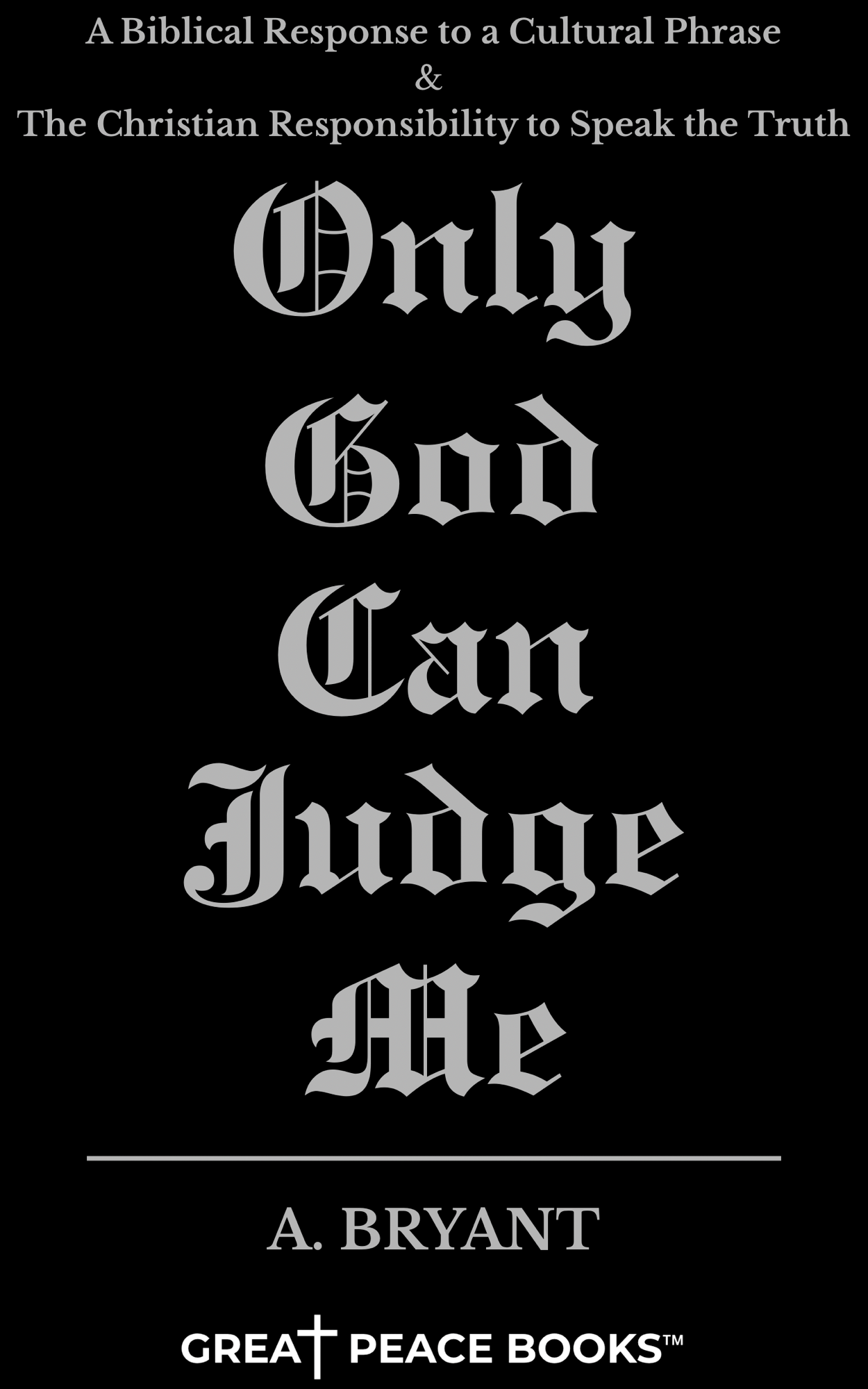
“Only God can judge me.” We all know the saying. You might have heard it in a song, read it in an Instagram bio, or seen it tattooed, often poorly, on someone’s body.
While the phrase sounds biblical, I think it is mainly used culturally as a “Correctional Kevlar”, protecting the one who says it from any potential admonishment for their behavior. While he didn’t invent the saying, Tupac Shakur made it famous in the
1990s with his song of the same name.
And while the song itself implies an acknowledgment that only God has the authority to judge or criticize someone’s actions, I doubt (and shame on me for this assumption) that most who parrot the phrase have much respect for God as the final—or the One True Judge at all.
My assumption is that they simply do not want anyone to judge them, so they pass the responsibility to a god, an idea, or a universe of their own making, failing to realize that responsibility is not something they have the authority to assign or remove in the first place.
What was once a declaration of divine authority is now a battle cry for individualism, which in its current form has become an extreme—used to deflect scrutiny from immoral behavior and to seek reassurance from others who share the same sense of self-justifying autonomy.
This “New Age Spirituality” has attached itself to this phrase as well, along with making truth something that is subjective. Which isn’t a new thought at all, but that doesn’t make it any less wrong than it is.
The phrase, as it may once have been intended—to honor God—is now being used for nothing more than an announcement of someone avoiding accountability.
And if “Only God Can Judge Me” isn’t actually Scripture, what does the Bible actually tell us about judgment?
Next Post: Part 2, Exploring what the Bible tells us about judgment.


